


One bet, every NHL game of the night
I had a Tuesday night last November where ten NHL games kicked off between midnight and three in the morning UK time. I’d modelled each individually. By the time I’d worked through all ten, the Grand Salami on the slate was offering 56.5 with the under at 1.85, and my combined per-game projection was 54.8. I took the under, slept, and woke up to fifty-three goals across the slate and a settled ticket. The market existed specifically for nights like that.
Grand Salami bet is an over/under on the total combined goal count across every NHL game scheduled for a single night. UK books post the line in the morning of the slate and lock it just before the earliest puck drop. The over/under prices sit close to even — typically 1.90 each side — and the line itself moves through the day based on goalie news, line scratches and weight of money.
The reason this market is worth knowing is that it consolidates a slate-wide view into a single bet. Instead of placing ten individual totals and paying ten individual vigs, you place one bet that captures your view of the night’s total pace. The overround is roughly the same as a single full-game total, but the variance is dramatically lower because you’re averaging across the entire slate.
How the all-games total is constructed
The Grand Salami line is the sum of every individual game total on the slate. If there are ten games scheduled with totals ranging from 5.5 to 7.0, the underlying sum might land at 62.5, and the book posts the Grand Salami at 62.0 or 62.5 depending on the half-point conventions.

The book adjusts the headline number slightly down on busy slates to absorb the over-leaning recreational money that loads on this market. UK books carry the Grand Salami with the over slightly more expensive than the under on the same line, even when the underlying total points would suggest even pricing. The shading is small — 1.90 / 1.95 instead of 1.93 / 1.93 — but it’s there.
The other thing baked into the line: schedule shape. A slate of ten games has different variance characteristics from a slate of five. The standard deviation of total goals across ten games is roughly the square root of ten times the per-game standard deviation, which is less than ten times the per-game spread. The line on bigger slates is structurally closer to fair, because the law of large numbers eats some of the variance the book would normally need to price against.
The NHL is a $6.5 billion revenue product in 2024-25, and that scale supports the depth of data the league publishes on every game. The book pricing your Grand Salami has the same data feed for ten games as for one, which means the underlying inputs are sound. The error, when it exists, is in the slate-wide adjustment, not the per-game inputs.
Where the line moves through the day
Grand Salami line movement happens in three waves through a UK afternoon and evening before the games actually start.
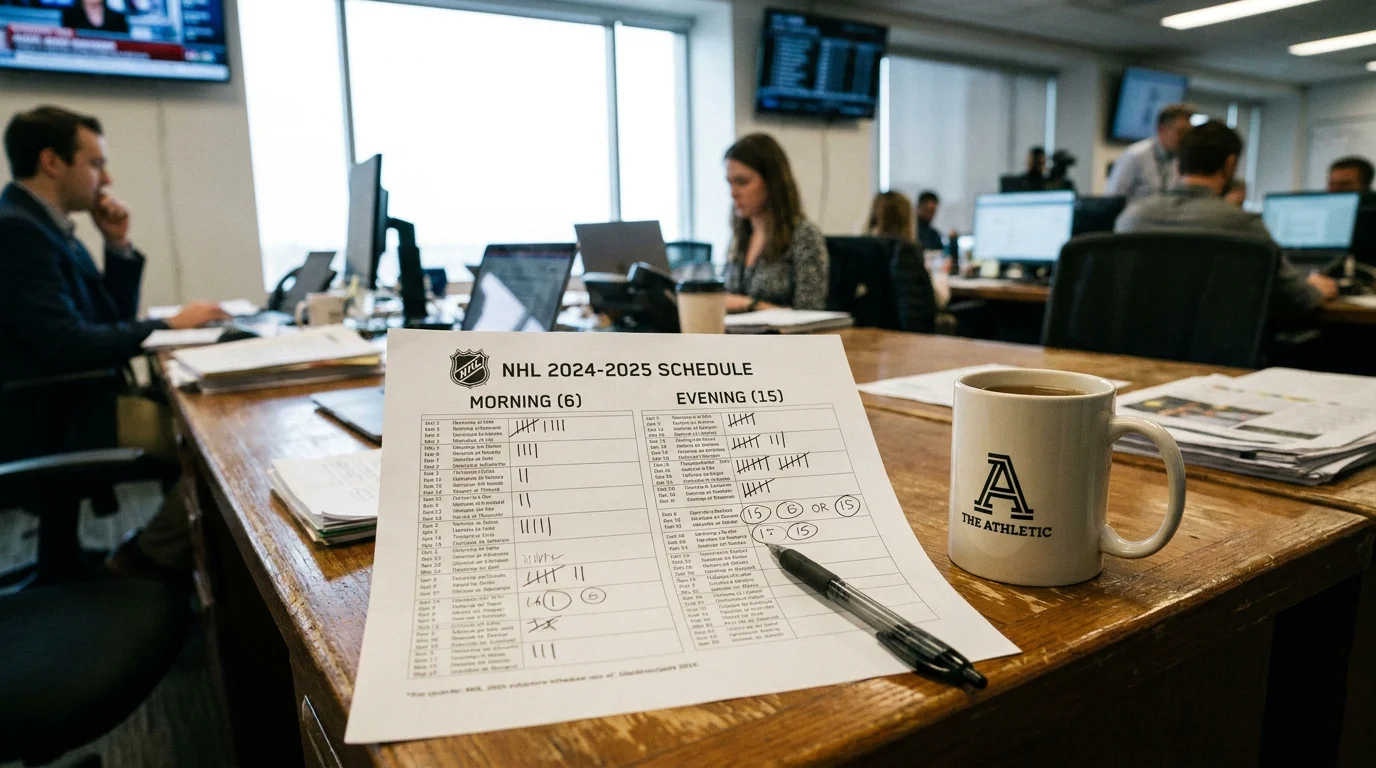
The first wave is the morning open. UK books typically post the line at 8 to 10 a.m. UK time. The initial price reflects the sum of the per-game totals as the book had them overnight. By mid-afternoon, the major North American books have posted their own lines and the European market re-prices to align.
The second wave is the late-afternoon goalie news. Starting goalies on NHL teams are usually confirmed five to seven hours before puck drop. If three or four teams switch starters from their projected goalie, the per-game totals on those games shift by 0.3 to 0.5 each, and the Grand Salami moves by a goal or more cumulatively. This is the window where the sharpest movement happens.
The third wave is the late-evening recreational load. As UK punters get home from work and the slate gets closer to puck drop, the over money loads in. The line creeps up by half a goal in the last two hours before the earliest game, especially on famous-matchup slates with Toronto, Boston or the Original Six teams in action.
Where the all-games total is most worth the bet
Grand Salami is at its best on slates with ten or more games. The variance smoothing across that many games is significant enough that the under has a structural lean when the line is set near the cumulative per-game projection — because the rec money pulls the line slightly up, and the average reverts to the cumulative projection in the long run.

Twelve-game and thirteen-game slates are rare — they happen mainly on Tuesday, Thursday and Saturday slots in mid-season — but when they appear, the Grand Salami is the cleanest expression of a slate-wide pace view. The 2023-24 regular season recorded 22.9 million tickets sold at a 96.2% capacity rate, and the volume of games sustaining that attendance is exactly what produces these big-slate nights. The mid-season schedule peak is when the Grand Salami earns its keep.
The opposite spot — slates with three or four games — is where the Grand Salami is too volatile to bet sensibly. A single goalie scratch or empty-net swing on a four-game slate moves the result by enough to overwhelm any read you had. I avoid Salami markets on light Friday and Sunday slates.
The traps to know before clicking the over
The first trap is the weather-and-travel correlation on multi-game slates. If three games on the slate involve teams flying cross-country between Eastern and Western time zones, those three games will run slower than the per-game totals suggest. The cumulative effect is half a goal lower than the book has it, but the Salami line doesn’t always reflect this — books price each game independently and the cumulative correlation gets lost in the sum.

The second trap is late-scratch information. The Grand Salami line locks before the earliest game, but the per-game totals can still move after that lock if news lands during the slate. If you place the Grand Salami at 10 p.m. UK time and a star centre is scratched at 11.30 for an 11.45 puck drop, the per-game total on that match drops by 0.4 and you’ve already bought a half-goal of disadvantage you can’t get back.
The third trap is the over bias on famous matchups. If a Toronto game is on the slate and it’s posted at 6.5 with the over at 1.85, the rec money loads on that game’s over. The Grand Salami absorbs the same bias in its line. The under has a slight structural edge on slates where the famous-matchup names are concentrated, because the book has shaded the cumulative line up to absorb the load.
The EIHL equivalent
The EIHL doesn’t have a Grand Salami market. The league plays fewer simultaneous games on a typical night — usually three or four EIHL fixtures on a weekend evening, sometimes just one — and the slate isn’t deep enough to support an all-games total. If you’re looking for a multi-game total bet on UK-based hockey, the closest equivalent is a manually built parlay across the night’s three or four individual totals.

The natural companion: the single-game totals view
If Grand Salami is the slate-wide expression, the per-game total is the building block. The full unpacking of how individual NHL totals are set, where the line moves and which game-specific situations carry the cleanest reads sits in our over/under hockey totals guide.
Articles
Prepared by the hockeybetonline.com editorial staff.
