


How sportsbooks land on 5.5 or 6.5 — and what makes the line move
Last March a reader sent me a screenshot of a Toronto-Montreal total at 6.5 with the over priced at 1.85 and asked if the book had made a mistake. It hadn’t. The number reflected a specific reading of pace, goalies and special-teams play that took a model six minutes to produce and would take a punter the rest of the evening to argue with. The lesson stuck: hockey totals look like simple over/under numbers, but the maths underneath them is the most opinionated part of the slip.
Over/under hockey is a bet on the combined goal total of both teams in a single game. UK sportsbooks list the line as a decimal — almost always something like 5.5, 6 or 6.5 — and you pick whether the actual score lands above or below. Roughly three-quarters of NHL totals settle in the 5.5 to 6.5 band, which makes those three numbers the spine of every UK NHL coupon. The half-point sits there to remove the possibility of a push.
The reason this market deserves more attention than most punters give it: the price moves on information that the moneyline barely notices. Confirmed goalies, line scratches, even arena ice quality on dome days in Florida — all of it shows up first on the total. By the time the moneyline has shifted by a tick, the total has often already moved by half a goal. If you want to know what the sharp money thinks about a game, watch the total before you read the headline price.
What goes into the line in the first place
The totals model that UK bookmakers price from isn’t a guess. It’s a pace projection built on each team’s recent shot rate, shot quality, save percentage and special-teams efficiency, then adjusted for the specific matchup. Two high-event teams with mediocre goalies will produce a 6.5 with the over slightly juiced. Two strong defensive sides with reliable starters land at 5.0 or 5.5, often with the under at the shorter price.

The biggest input is goaltending. A team that scores 3.2 a game and concedes 2.8 has a true total around 6.0 when both starters play. Swap one starter for a backup with worse shot suppression and the model lifts the line by 0.3 to 0.5, sometimes more in obvious blowout-prep situations. That single piece of information explains more line movement than weather, travel and momentum combined.
The second input is special teams. A team with a power play running over 25% playing one taking 9% penalties a game is going to push the total north regardless of even-strength numbers. If you’re trying to read a line, look at where the two penalty kills sit on the rolling table — top-10 PKs flatten totals, bottom-10 PKs inflate them.
The third input is the schedule. A team on the second night of a back-to-back, especially after a long flight, plays a slower game on average. The model knows this; the line moves accordingly. The IIHF World Championship in 2025 produced 373 goals across 64 matches for an average of 5.83 per game, which sounds like a 5.5 total league. It isn’t — international ice is wider, the bracket compresses the talent gap, and the average masks a 7-2 group game between Canada and Norway that bent the curve. Reading averages without context is the fastest way to lose money on totals.
What moves a posted total
Lines move for two reasons: new information and weight of money. Both matter, but they mean different things.

New information is the goalie scratch, the late line shuffle, the announcement that a star centre is on the COVID list, the arena building issue. These are the moves you want to be on the right side of, because they’re priced rationally. A confirmed backup in net usually shifts the total by half a goal and the moneyline by twenty pips. If you saw the news a minute before the book reacted, the value is real. If you saw it ten minutes after, the value is gone.
Weight of money is the public load on a famous matchup. Toronto-Montreal at six o’clock UK time on a Saturday will see overs hit by recreational money regardless of the underlying numbers. UK books often shade those totals up by a tick to absorb the load. The under at 6.5 +0.5 -110 on a game that would be priced at 6.0 by a sharp shop is the kind of soft spot you collect when you’re paying attention to context.
The single line movement I trust most is the steam move that arrives ninety to sixty minutes before puck drop, after lines are confirmed but before the rec money loads in. Movement at that window is usually goalie-driven and almost always sharp. Movement in the last fifteen minutes before puck drop is recreational and often goes back the other way once the game starts.
Live totals: betting the rate after the score has moved
In-play totals on hockey are a different sport from pre-game totals. The line resets after every goal, and it resets fast — sometimes within ten seconds. The book is no longer projecting from cold; it has the scoring rate of this specific game, this specific period, and it adjusts accordingly.
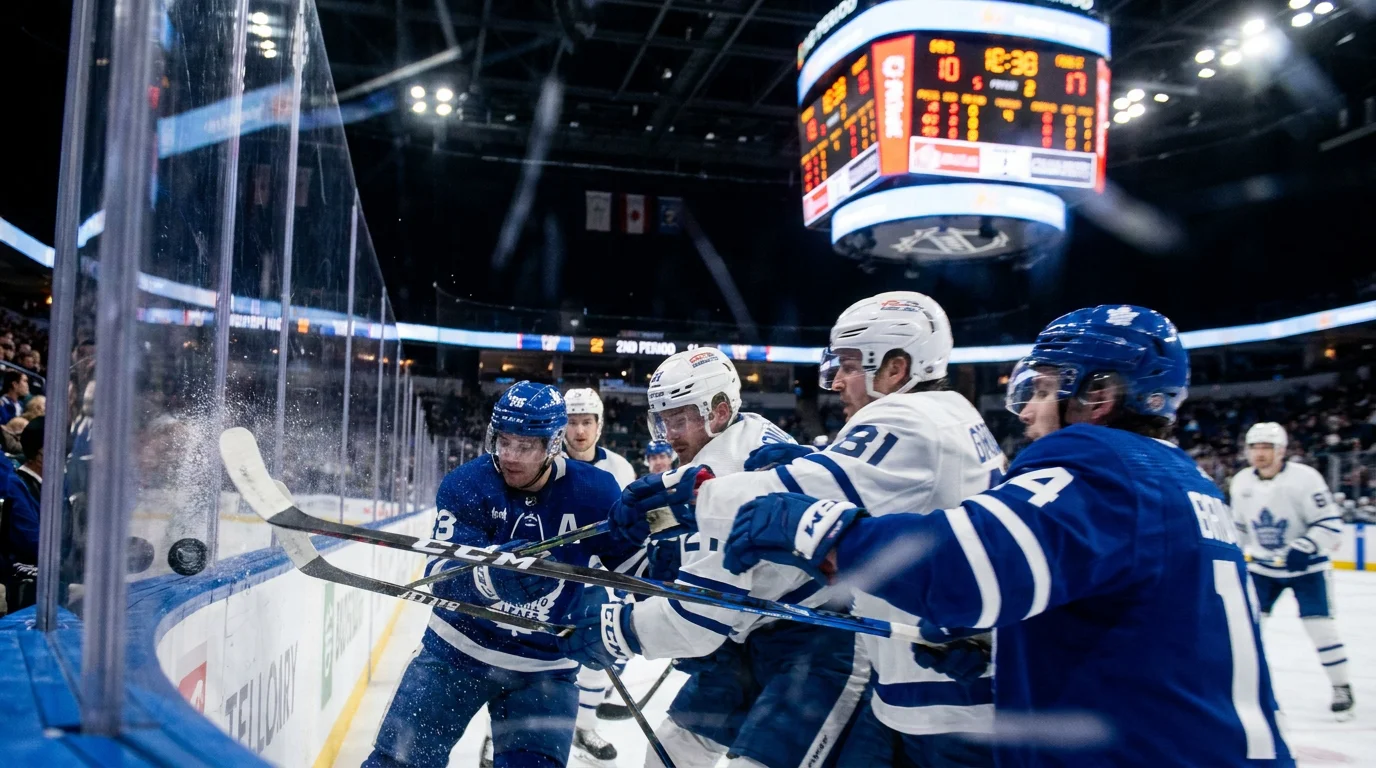
The most common in-play totals are full-game totals re-priced after each goal, period totals for the period currently being played, and “next-goal” markets that pay on which team scores next. Period totals are the cleanest of the three. A 2.5 total for the third period of a 1-1 game tells you the book expects roughly two more goals before the buzzer. If you fancy a low-event finish — empty net not yet pulled, two tired teams, a goalie playing well — the under at -120 is often better than it looks.
The trap on live totals is chasing. A game that has produced four goals in twenty minutes feels like it’s heading to nine, and the over at 6.5 looks cheap at -180 with two periods to play. Usually it isn’t. Hockey scoring rates regress harder than football scoring rates, because the goalies adjust mid-game and the coaches shorten the bench. Backing the over on a hot first period is one of the most consistent ways to leak EV in this market.
Team totals: a sharper read than the headline number
Team totals isolate one team’s goal count for the match and ask whether they land over or under a specific number. Typical UK lines are 2.5 or 3.5 for the favourite and 1.5 or 2.5 for the underdog. The market is less liquid than the full-game total, which means the price is more often soft.

The 22.9 million tickets sold across the 2023-24 NHL regular season at a 96.2% capacity rate tells you everything about why this market exists: there’s enough volume of hockey, watched by enough people, to support a granular betting product that football wouldn’t sustain. UK books carry team totals on every NHL match and most EIHL matches, even when the rest of the props tree is thin.
The use-case I run team totals for is when I have a directional view that doesn’t match the moneyline. If I think Toronto wins comfortably but the moneyline is 1.50, the Toronto team total over 3.5 at 2.10 is often the cleaner expression of that view. It pays better, and it doesn’t depend on whether the other side scores. I lose if Toronto wins 3-1, but I win if they win 5-2 or 4-0, which is the outcome distribution I was actually backing.
EIHL totals run on a different chart
EIHL goal rates run noticeably higher than NHL goal rates. The smaller ice, the shorter rosters, and the more variable goaltending all push averages up. Typical EIHL totals sit between 6.5 and 7.5, with peak matchups occasionally posted at 8.0. A 6.0 EIHL game is the equivalent of a 5.0 NHL game — quiet by domestic-league standards.
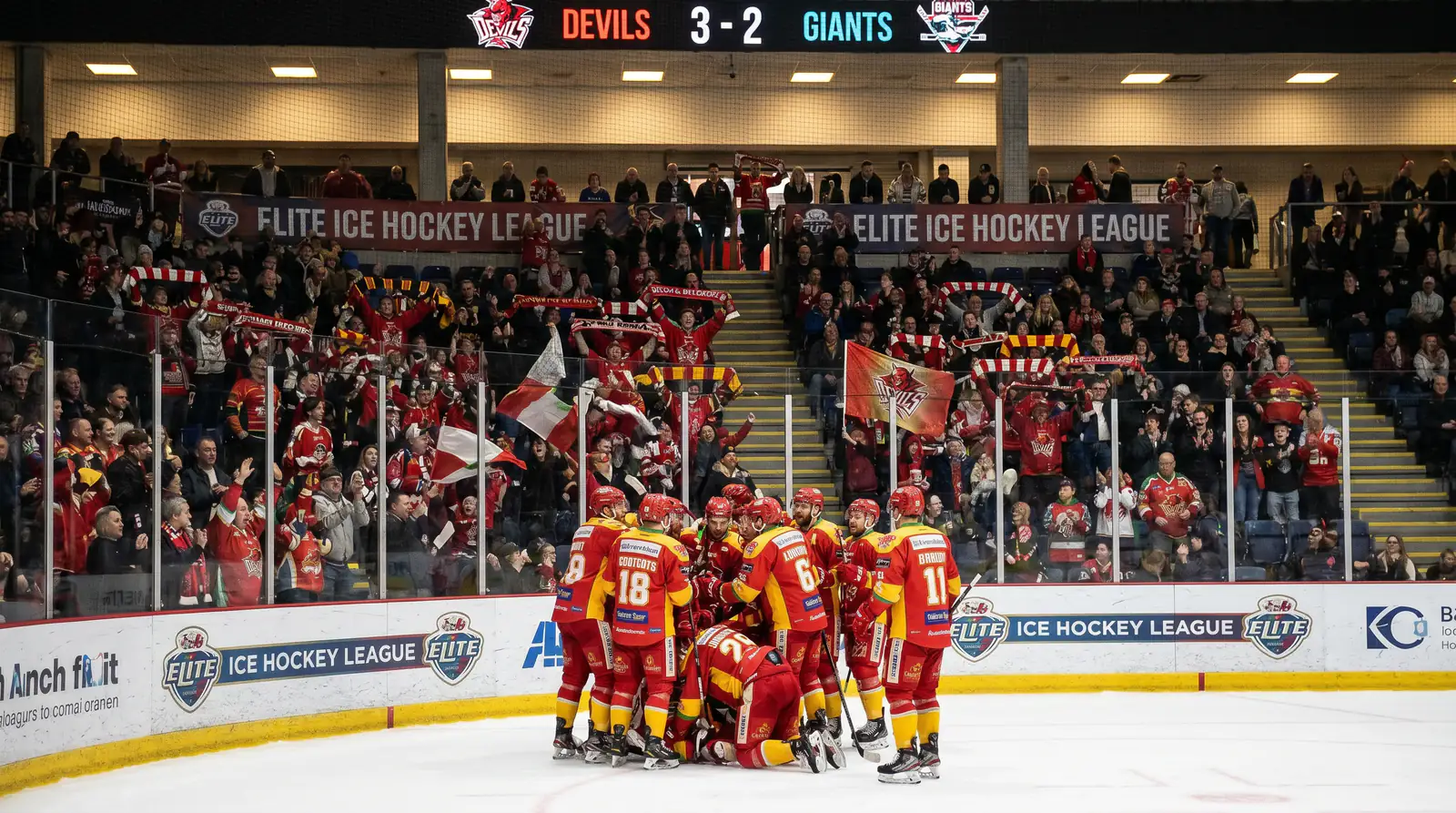
The trade-off is liquidity. EIHL totals on UK books are priced from thinner data than NHL totals, and the books don’t move them as quickly when new information lands. If you follow the league, you can sometimes find a 7.5 line that should be 7.0 because the home goalie has been pulled from the previous two starts and the book hasn’t updated. The window is narrow but it exists.
Stacking the goal counts of every game on the night
If you’re betting totals seriously, the next market worth understanding is the all-games total: one bet on the sum of goals across every NHL game scheduled for the day. The structure changes the maths, and our Grand Salami bet guide walks through where the line comes from and which nights it actually pays.

Articles
Created by the "hockeybetonline.com" editorial team.
