


In-play hockey moves faster than most live markets — what that means for the UK click
I’ve timed line shifts in NHL in-play markets across a season. The median delay between a goal being scored and the live moneyline updating is somewhere around two seconds on UK books. On football, the equivalent number is closer to eight. Hockey’s pricing engines have to refresh that fast because the game itself moves that fast, and a punter sitting on a Premier Sports stream at one in the morning has very little room to outrun the book.
Live hockey betting is wagering on continuously updating odds during a match. The available markets shift every time the puck changes hands, every line change, every penalty. In hockey specifically, line shifts happen every 40 to 60 seconds, which means the underlying state of the game changes more often than in any other major team sport, and the prices have to keep up. That’s why in-play hockey looks like a market on fast-forward.
For UK punters, the experience is doubly compressed. The games are happening on Eastern or Pacific time, which puts most of the action between midnight and four in the morning UK time. You’re watching on a stream with a delay, betting on a market that’s already moved, against a book that’s getting league-grade data faster than your broadcaster is getting the footage. That gap is the structural problem of UK in-play hockey, and the only way to play it sensibly is to understand exactly how it works.
The in-play markets actually worth looking at
UK books carry roughly a dozen live markets on every NHL game. Most are restatements of the pre-game options at current state. A handful are genuinely useful, and the rest are noise the book carries to fill out the coupon.

The full-match live moneyline is the headline market. It re-prices after every goal and every major event. If the underdog scores first, their moneyline tightens by 60 to 80 pips and the favourite drifts. The price you see is the book’s current estimate of who wins from this scoreline, this period, this momentum.
Period winner markets ask who scores more in a specific period. They reset at the start of each period and pay on the goal differential of that twenty-minute window only. These are sharper than they look. If a goalie is having a bad night and gets pulled at the second intermission, the third-period winner market on the team going to the backup is often mispriced for the first three or four minutes of play.
Total over/under for the current period is the third useful market. Set at 1.5 or 2.5 depending on the state of the game, it asks whether the remaining time produces enough goals to clear the line. A 2.5 in the first period of a fast-starting matchup can be terrific value at 1.85 if you’ve seen the early shot rates and the goalies haven’t settled.
Race-to-next-goal is the fourth. Two prices, one for each team scoring next. The market closes when someone scores and reopens immediately. It’s the most popular live hockey market in the UK because it pays fast and feels intuitive, but it’s also where rec money loads in heaviest, which means the prices are usually a touch shaded against you.
Momentum, power plays and how books read the swing
Hockey has a momentum-driven scoring distribution that footballers find confusing. A team that controls play for three minutes after a penalty kill often scores within ninety seconds of the next neutral-zone faceoff. A team that gets badly outshot for ten minutes is usually about to concede. Books model this with shot-rate-weighted intensity, and the live line moves accordingly.
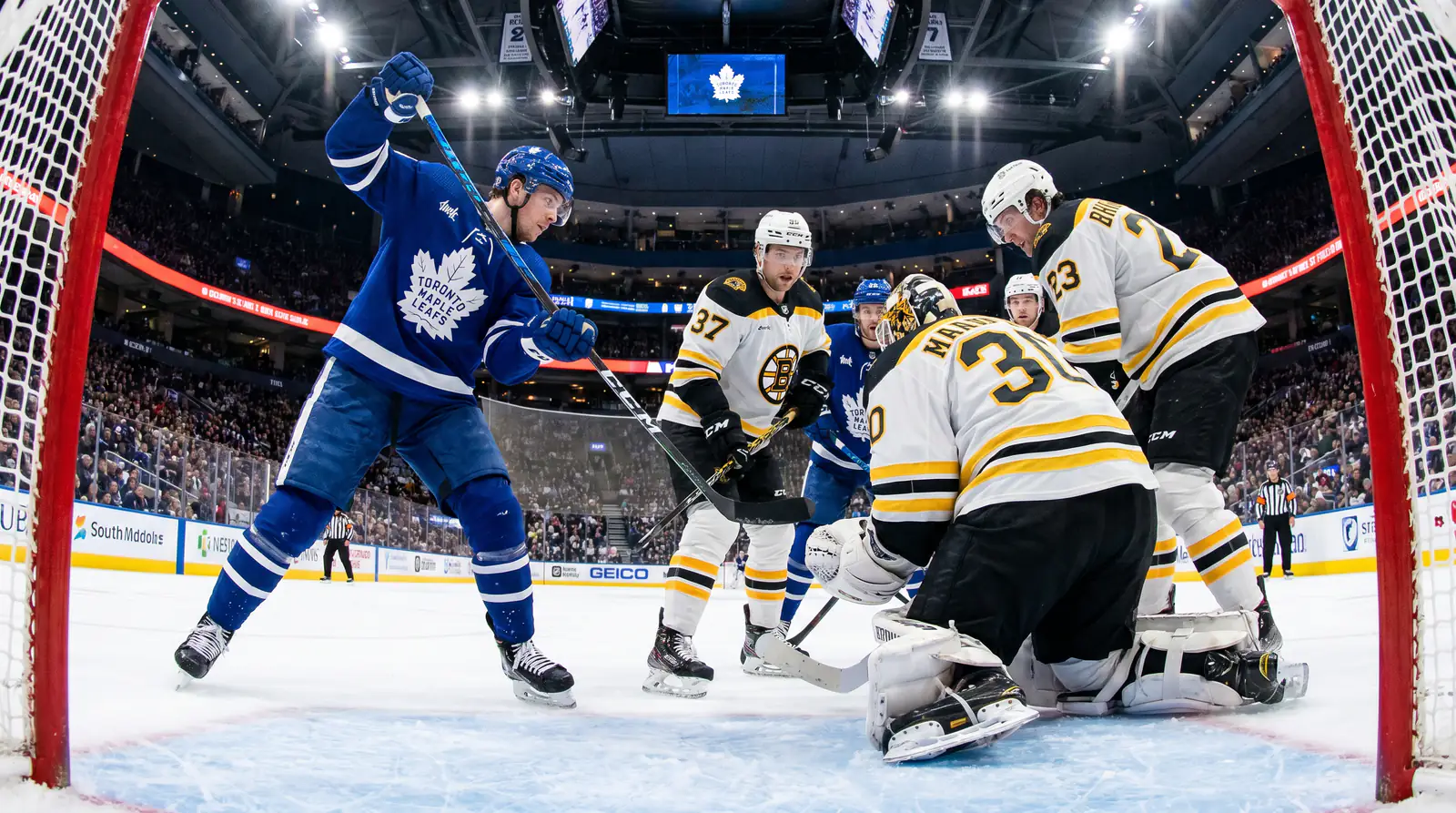
Power plays are the most obvious momentum trigger. When a penalty is called, the moneyline of the team going on the power play tightens immediately, sometimes by 40 to 60 pips for a one-goal lead. The over for the rest of the period tightens by 5 to 10 pips. The race-to-next-goal flips to favour the power-play side by a wide margin. All of that happens in under two seconds across the UK books, and it’s driven by data the league feeds directly to anyone licensed to use it.
NHL EDGE, the league’s tracking system, is installed in every one of the league’s 32 arenas through infrared cameras and produces millions of data points per game on skating speed, shot velocity and zone time. That data feeds the live pricing models that UK books use. The book setting your in-play line knows the exact xG of the last shift before you do. As Gary Bettman put it on the broader subject of monitoring NHL games, “we monitor every minute of every game — both in terms of what’s taking place in terms of play and what, if anything, is happening with the lines.” That’s the league side of the same data feed. The market side is the book using it to set prices faster than you can blink.
The latency problem and what it does to your edge
Your stream has a delay. The book does not. That mismatch is the single biggest reason most UK in-play punters lose money over time.
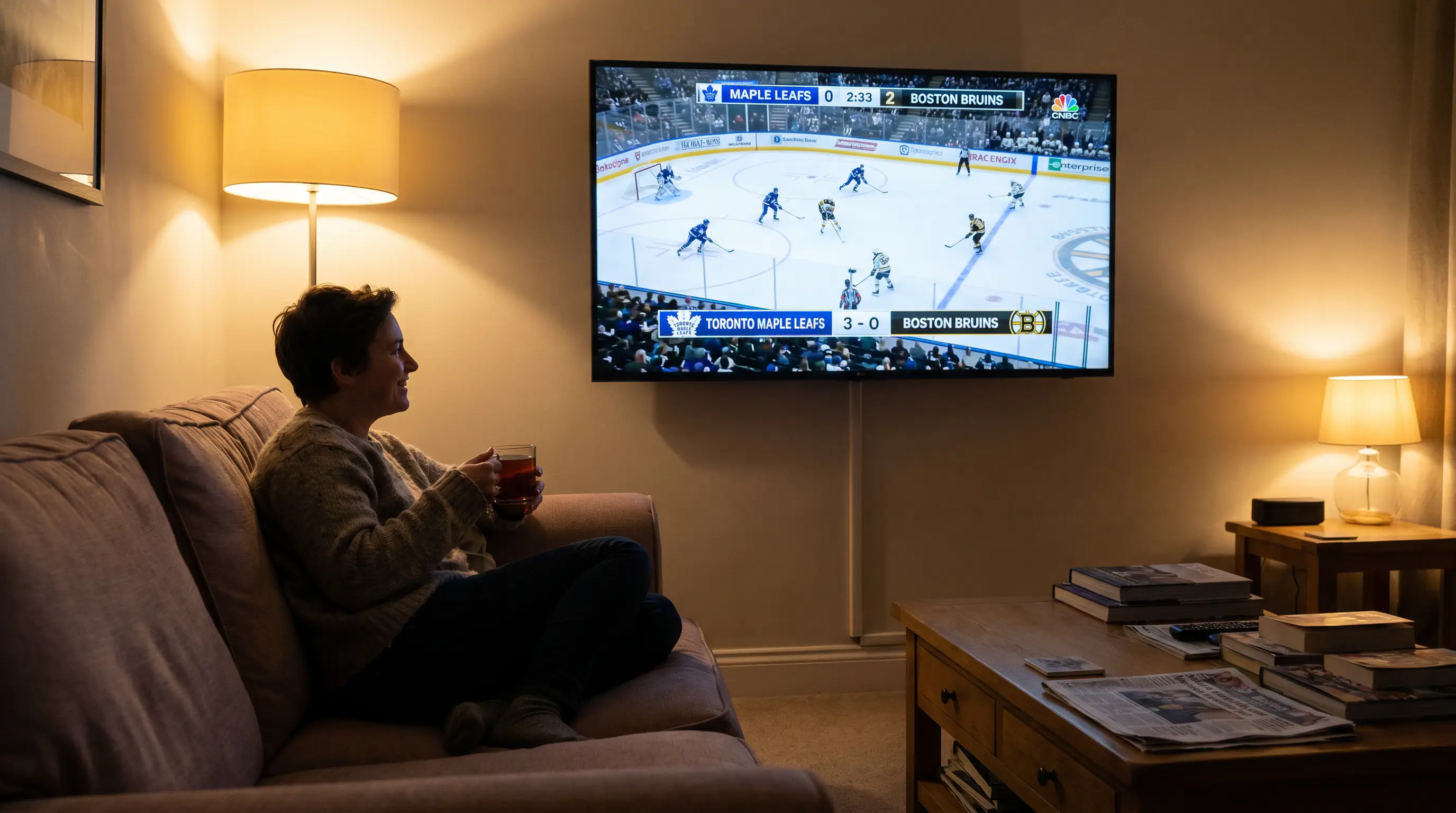
Premier Sports streams sit at five to fifteen seconds behind the live feed depending on your connection. ITVX, which carries a free-to-air NHL game per week, runs at eight to twenty seconds behind. DAZN through the international deal sits somewhere in the same range. The book’s data feed updates within a second of the actual play. If you’re betting from the picture on your screen, you’re betting on information the book already had ten seconds ago.
The practical consequence: any in-play bet you place on a goal-driven moment — race to next, period totals, live moneyline — is being priced from the book’s view of a moment you haven’t seen yet. By the time the screen catches up, the price has already moved. If you placed a bet right when something happened on your stream, the book either accepted it at the new price or rejected the stake entirely.
What works against the latency: pre-positioning. Set live alerts for the markets you’re tracking. If you know a goalie is wobbling, place the position before the next shift starts, not after the bad goal you saw on the screen. If you want the over for the period, take it before the first faceoff of that period, not after the first shot. The book is faster than you when you’re chasing events; you can be at parity with the book when you’re anticipating them.
The cash-out brake
Live cash-out is the live market’s exit door. It lets you settle an open ticket at the current market value rather than waiting for the final result. On hockey specifically, cash-out values shift faster than the underlying line because the book bakes its margin into the cash-out price.

The Premier Sports Online tariff for NHL access in the UK runs at £11.99 per month for the annual pay-as-you-go plan, £120 for the annual prepaid plan, or £16.99 for the flexible monthly plan. I mention the prices because most punters paying for a subscription to watch the league treat cash-out as a “use it or lose it” feature on every ticket they place. That’s the wrong frame. Cash-out is a hedging tool, not a default exit, and the EV maths is worth understanding before you start clicking the green button reflexively.
Hopping between live totals and period markets
The combination I run most often is a live total position paired with a period-winner ticket. A team that needs goals in the third will produce a high-event final twenty minutes, which is bullish for the period over but bearish for the trailing team’s period-winner odds. Stacking those two markets gives you exposure to the right side of the scoring rate without committing to a specific team to score them.

What pace the rest of the night actually pays
Stat-001 isn’t needed for this section; the broader scaffolding above carries the picture. What matters at the end of any live session is that the latency problem doesn’t disappear because you’ve practiced. It’s structural. The trick is to bet markets where speed matters least — period-level totals, pre-positioned underdog moneylines, alternative lines you’ve set before the shift starts — and to stay out of the markets where speed matters most. If you find yourself reflex-clicking on cash-out a lot, the broader view of when that pays and when it burns is unpacked in our cash out hockey bets guide.

Articles
Created by the "hockeybetonline.com" editorial team.
