

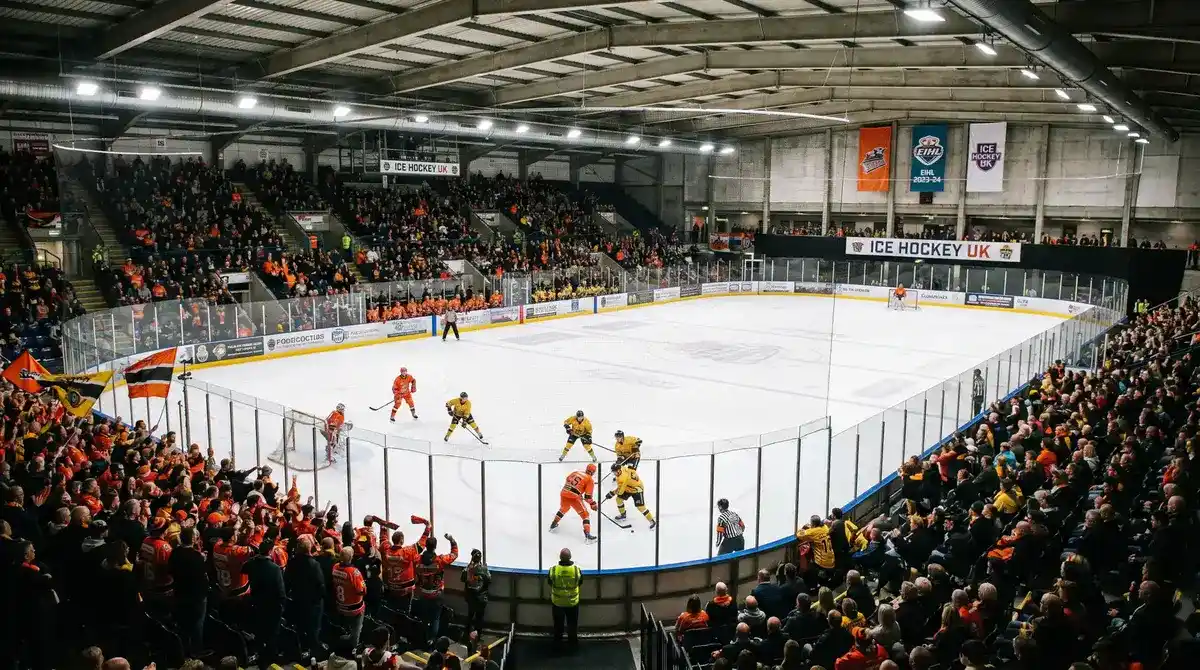
EIHL betting and why mainstream UK books still leave value on the table
I once placed an EIHL three-way moneyline at 09:42 on a Saturday morning, watched the line move by a quarter through the day, and saw the closing price land 18 cents short of where I’d opened. The next morning I checked the same book at the same time, and the same team was priced at last week’s wrong number. That’s not market efficiency. That’s a market the desk doesn’t trust enough to update on a Tuesday.
The Elite Ice Hockey League is the top tier of British professional ice hockey, based in ten cities across England, Wales, Scotland and Northern Ireland. As a betting object, EIHL betting sits in an awkward middle ground — popular enough that every major UK book lists it, but not popular enough that any of them invest serious modelling time in pricing it. The result is exactly what you’d expect: a thin market with wide vig, irregular line updates, and pockets of recoverable value for anyone willing to do the homework that the bookmaker hasn’t.
That value comes with a real cost. Liquidity risk on EIHL markets is genuine — limits are lower, suspensions are more frequent, in-play coverage drops first when something unusual happens. The same softness that creates the edge can shut your account down on a hot streak. If you’re going to play this league seriously, you need to understand both sides of the trade. The next eight sections walk through exactly where the league sits on a UK book, how the markets are priced, and what a careful punter does about it.
The shape of the league: ten teams, fifty-four games, three-way reality
Ten teams. Fifty-four regular-season games. No conferences, no divisions, no wildcard race — just a flat table where everyone plays everyone, and the top eight enter a playoff bracket. The EIHL is the kind of league a betting model can describe on a single sheet of paper, which is exactly why so few bookmakers bother to build one for it.
The structure is brutally simple. The regular season runs from late September to mid-April. Each team plays each other team six times — three at home, three away. Points are awarded three for a regulation win, two for an overtime or shootout win, one for an overtime or shootout loss, zero for a regulation loss. There is no salary cap in the traditional NHL sense, but there is an import limit, which means roster construction is constrained in ways that affect competitive balance more than UK punters usually realise.
The 2025–26 season finished the regular schedule with Belfast Giants on 84 points across 54 matches and a goal differential of +85 — their eighth regular-season title in the modern EIHL era. That kind of consistency at the top of the table tells you two things as a punter. First, dynastic teams in the EIHL are unusually persistent compared to the NHL, where parity-driven salary mechanics churn the top each season. Second, the price on the regular-season winner outright market closes much earlier in the EIHL than it does in any major North American league, because the field is small and the leaders separate fast.

Ice hockey is the most-attended indoor professional sport in Great Britain, ranked third among winter spectator sports behind football and rugby union. That ordering matters for betting markets in a specific way: it puts hockey above basketball, above netball, above any indoor sport with a comparable broadcast footprint. Yet basketball gets more in-play depth on most UK books, and netball outscores hockey on prop trees. The mismatch between live attendance and bookmaker investment is the structural inefficiency that EIHL betting lives inside.
The three-way moneyline reality is the other shape feature worth knowing up front. On most UK books, the default EIHL moneyline settles on regulation time only — sixty minutes of play, with overtime and shootout pushing the regulation result to a tie. This is not a quirk; it’s the standard. The two-way moneyline including OT and SO is offered as a secondary market on a minority of books, and it’s worth distinguishing carefully because the same wager placed on the wrong default settles in a different direction.
Attendance is the leading indicator EIHL bettors ignore
Bookmakers price horse races on the form book, football matches on the model, and EIHL games on whatever the trader had time to do between two NHL trees on a Wednesday afternoon. Public attendance — turnstile numbers, season ticket renewals, road attendance — is one of the cleanest indicators of where the market is going to tighten next, and nobody pricing this league seems to read it carefully.
Total EIHL attendance reached 1,247,972 across the 2024–25 season, an average of 3,660 per game, which was already a record for the league. The 2025–26 season pushed it further still to 1,321,128, an average of 3,863 per game. That’s two consecutive season records in a league that competitors have been writing off as a niche British indoor product for the last decade. The growth curve is the betting signal, not the absolute number.
Sheffield Steelers averaged 7,978 spectators per game across 2024–25 — more than double the league average and approaching genuinely large-arena numbers. Their record gate of the season was 9,638 fans against Nottingham Panthers on Boxing Day. Those aren’t soft numbers; that’s a team selling out a Big Top in a market that football is supposed to own entirely. The competitive consequence is roster spending, which the bookmaker should model into the next-season win-total market and frequently doesn’t.

Editorial coverage at British Ice Hockey put it directly: The 2024–2025 EIHL season didn’t just do well; it set up a new bar for the sport in Britain. The league pulled in a record 1.25 million spectators, a number that signals a genuine shift in public appetite. A genuine shift in public appetite is also a genuine shift in roster economics, which is a genuine shift in competitive balance, which is the input the bookmaker is slowest to incorporate into outright pricing. The mismatch between attendance growth and market response is precisely the window value-hunting EIHL punters operate inside.
Practical reading: when a non-Sheffield team posts three consecutive home gates above its three-year average in the early part of a season, the outright price on that team’s regular-season finish is usually slow to follow. By the time the bookmaker adjusts, the closing line is already 30 to 50 cents tighter than the morning price.
What EIHL markets look like in practice
The EIHL market tree on a mainstream UK book is shorter than the NHL tree by an order of magnitude, and the gap is not subtle. You’ll find five core markets, two seasonal markets, and almost nothing else. Anything you’re used to seeing on an NHL game — anytime goalscorer, shots-on-goal lines, period winners — is either absent or available only for marquee matchups with thin limits.
The first market is the three-way moneyline, settled on regulation time. This is the default and the one I check first. Pricing reflects regulation-only probabilities, so even short favourites carry meaningful odds. A team that would be -180 on the NHL two-way moneyline might be priced at +110 on the EIHL three-way regulation moneyline, with the tie at +220 and the underdog at +260. That looks like generous pricing until you remember you’re betting against a 22–28 percent regulation tie probability, which is genuinely material.

The second market is the two-way moneyline, including overtime and shootout. Only a portion of UK books carry it on EIHL games, and where it exists, the vig is wider than on the equivalent NHL market — often 7 to 9 percent, occasionally more on weeknight games with low expected volume. Liquidity is the limiting factor. The bookmaker isn’t gouging; it’s just hedging against having to settle a market it didn’t price tightly.
The third market is totals. EIHL totals run higher than NHL totals — typically 6.5 to 7.5 — reflecting the slightly higher goals-per-game average in the league. Public modelling on this is rougher than on NHL totals, and lines move less efficiently. Goalie matchup is a big input in the NHL price; on EIHL totals, the bookmaker often hasn’t even confirmed who’s starting before it publishes.
The fourth market is point totals across a regular season — over/under on a team’s final points tally. This is one of the better markets on the league because it forces the bookmaker to commit to a long-horizon view that the trader doesn’t have time to refresh. A team trending well in mid-November might be priced on a points total set in early September, before three roster additions and a goalie call-up. Slow-moving markets in fast-moving leagues are where the recoverable edge lives.
The fifth market is outright — winner of the regular season, winner of the playoffs, winner of the Challenge Cup. Playoff outrights tighten fast once the bracket is set; Challenge Cup outrights are usually thin and priced cautiously because the format compresses opportunity. Player props on EIHL games are scarce and limited mostly to anytime goalscorer on the top forwards of Sheffield, Belfast and a handful of others — when they exist at all, the stake limits are low.
Team-by-team betting profile in brief
The EIHL has ten teams, which means a useful betting profile of the league can fit in a single section if you keep it disciplined. What follows is the working sketch I use to remind myself which teams I’m reading correctly and which ones still surprise me.
Sheffield Steelers are the league’s commercial heavyweight and the team whose price you trust the least at home. The 7,978-per-game crowd creates a real home-ice advantage that the bookmaker prices in conservatively. On the road, Sheffield’s value emerges most clearly on three-way moneylines when the home crowd isn’t doing the work. Belfast Giants are the team whose price you trust the most on consistency — they’ve finished top of the table in eight regular seasons, including 2025–26. Belfast is the team you back against random opponents and fade against opponents who match their structure.
Nottingham Panthers carry the league’s biggest brand outside Sheffield and Belfast, with a long-standing rivalry calendar that creates derby-night volatility. Their home prices spike on Boxing Day and other traditional fixtures. Cardiff Devils have been competitive for years and have a tight-game profile — their totals tend to play under more often than the league average, which is a reading the bookmaker captures with delay. Coventry Blaze occupy the middle of the table on most measurements and present the cleanest underdog profile against the top three.

The remaining five teams — Glasgow, Dundee, Fife, Manchester, Edinburgh on a rotating composition depending on the season — share a profile of variable competitiveness and roster turnover. Their prices are the loosest in the league, which makes them either the best value or the worst trap depending on the week. The signal that separates the two is goalie consistency: a team with a confirmed number-one starting 80 percent of games can be priced; a team rotating two goalies of similar quality is a guessing game even for the bookmaker.
Read the league through a single shorthand: top three (Belfast, Sheffield, Nottingham) carry the cleanest pricing; middle two (Cardiff, Coventry) carry the most exploitable home/road splits; bottom five carry the widest variance and the most stake-limit risk.
How EIHL betting differs from NHL on the same UK book
The most expensive mistake I see UK punters make on EIHL games is reading them like a smaller NHL. They aren’t. The pricing assumptions, the default markets, the vig structure, the cash-out behaviour — all of it diverges, and treating one league like the other will cost you real money.
The first divergence is the three-way default. NHL moneylines settle two-way on most UK books; EIHL moneylines settle three-way. A casual punter who clicks a “moneyline” expecting his team to win in any form, including overtime, finds himself on a tie at regulation and stares at a settled-loss ticket while the team celebrates a shootout win on his TV. The market name is the same. The settlement is different. Check before you stake.
The second divergence is vig width. NHL moneylines on a major UK book sit around 4–5 percent vig on the implied probabilities; EIHL moneylines on the same book often run 6–9 percent, sometimes wider on midweek games. That difference is your edge before you’ve placed a bet — you’re working against a steeper hill, which raises the bar on what you call a value play. A 55 percent confidence model on an NHL line might justify a stake; the same 55 percent confidence on an EIHL line with 8 percent vig might not.
The third divergence is props depth. Where the NHL board carries 40 to 60 props per game on a serious book, the EIHL board carries five at best, and only on derby nights. SOG lines barely exist. Save-percentage props exist only on the top three teams. If your edge model is built around player props, the EIHL is mostly closed to you.
The fourth divergence is cash-out coverage. UK books offer cash-out on EIHL moneylines and totals on most games, but the haircut on the cash-out price is wider than on equivalent NHL bets, especially deep into a third period. That’s a function of the same trader-coverage thinness — the bookmaker hedges against having to manually price a partial settlement on a market it isn’t watching closely.
The data gap and how a careful punter narrows it
The most useful sentence I can give anyone considering serious EIHL betting is this: NHL EDGE does not exist for this league. No infrared cameras tracking shot speed across all ten arenas. No public skating-speed leaderboards. No high-danger Corsi feed updating live during games. The advanced-data infrastructure that lets NHL bettors find soft pricing on the back of expected goals and zonal time — it’s simply absent in the EIHL.
What you have instead is publicly available boxscores, which tell you goals, assists, plus-minus, shots on goal, save percentage, and time on ice. That’s it. Building a tracking framework on top of those numbers is the closest a UK punter gets to an analytical advantage on EIHL games, because nobody else is bothering and the bookmaker isn’t either.
The first compensation is rolling five-game save percentage on confirmed starting goaltenders. A goalie running at .920 across the last five games is a meaningfully different bet from the same goalie running at .891 across the last five — and the bookmaker line often doesn’t move because the bookmaker isn’t tracking it. The second compensation is goal-differential pace. A team scoring 3.4 goals per game and conceding 2.8 has a true expected-points trajectory that the bookmaker’s outright market hasn’t fully digested. The third compensation is home/road splits broken out by goalie. Some teams have a clear home goalie and a road goalie, and the moneyline you’re betting against isn’t always pricing that.

Attendance trends — the leading indicator from two sections ago — feed back here. A team with three consecutive home gates above its three-year average is usually a team that’s also playing better hockey in front of those crowds. Crowds and performance correlate in the EIHL more tightly than they do in larger leagues, because the player-spending decisions and the crowd response are closer to a single feedback loop.
Narrowing the data gap doesn’t take a paid subscription. It takes 30 minutes per week with a spreadsheet, the EIHL official site, and a willingness to track what the bookmaker isn’t.
Watching the EIHL: streams, Premier Sports, and arena nights
You cannot bet a league well if you cannot watch it. EIHL broadcast coverage in the UK has been quietly improving for two seasons, but the live picture is still a patchwork compared to NHL access, and the in-play implications are real.
Premier Sports carries a curated EIHL schedule across the season, with two to three televised matches per weekend and additional midweek games on the Premier Player streaming service. Subscription pricing on Premier Sports Online in the UK runs £11.99 per month on annual pay-as-you-go, £120 per year on an annual prepaid, or £16.99 per month on flexible monthly — the same pricing structure that hosts NHL coverage, which makes the dual-league subscription efficient. EIHL official channels and individual club streams cover most non-broadcast games at modest per-match or season-pass prices.
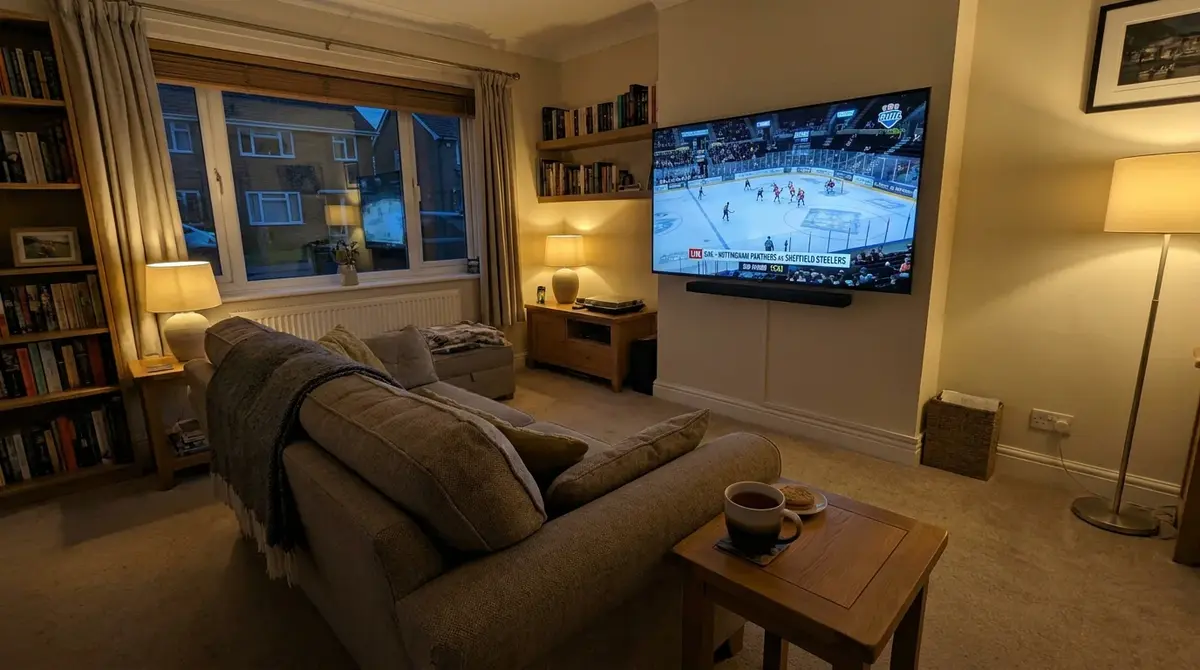
The practical consequence for in-play betting is that I can watch every match I want to bet, but rarely on the same screen at the same time. Live-betting EIHL games while the picture is on a club stream and the price is on the sportsbook is a workflow that requires two devices and a fast home connection. Latency between the rink and the sportsbook is typically five to fifteen seconds, which is enough to matter on a tight in-play line and not enough to ruin a slow-build edge.
For the postseason format, bracket pricing and where the playoff value tends to concentrate, see our EIHL playoffs betting walkthrough.
Common questions about EIHL betting
Four questions surface most often when readers ask about EIHL betting specifically, and the answers below are the ones I’d give in a face-to-face conversation rather than a polished brochure.
Where the EIHL value actually sits — and what to walk past
Eight years of EIHL betting alongside the NHL has compressed into a simple judgement: this league rewards patience and punishes flippancy in roughly equal measure. The recoverable edge is real, but it’s not the kind of edge you find by reading the form for five minutes before bed and clicking a moneyline. It’s the kind of edge you find by watching attendance growth, tracking goalie splits, and reading the regulation-only three-way price against an honest tie estimate.
What I walk past, without exception, are EIHL accumulators — three-leg parlays of EIHL moneylines at compound vig of 6–9 percent per leg are the bookmaker’s favourite product for a reason. I walk past Challenge Cup outrights priced before the bracket is set. And I walk past midweek games between two bottom-five teams where neither side has confirmed a goalie 24 hours out, because the variance on those games is wide enough that no edge survives it.
What I lean into are point-totals on top-three teams set in pre-season and revisited in November; outright regular-season winner markets through October, when the price hasn’t yet adjusted to early-season trends; and three-way regulation moneylines on derby nights where the public bias is sitting on the home favourite and the road price is being held up by attendance signal. Played carefully, the EIHL is one of the more rewarding markets a UK punter can build a routine around. Played casually, it’s the bookmaker’s quietest profit centre.
Articles
Prepared by the hockeybetonline.com editorial staff.
